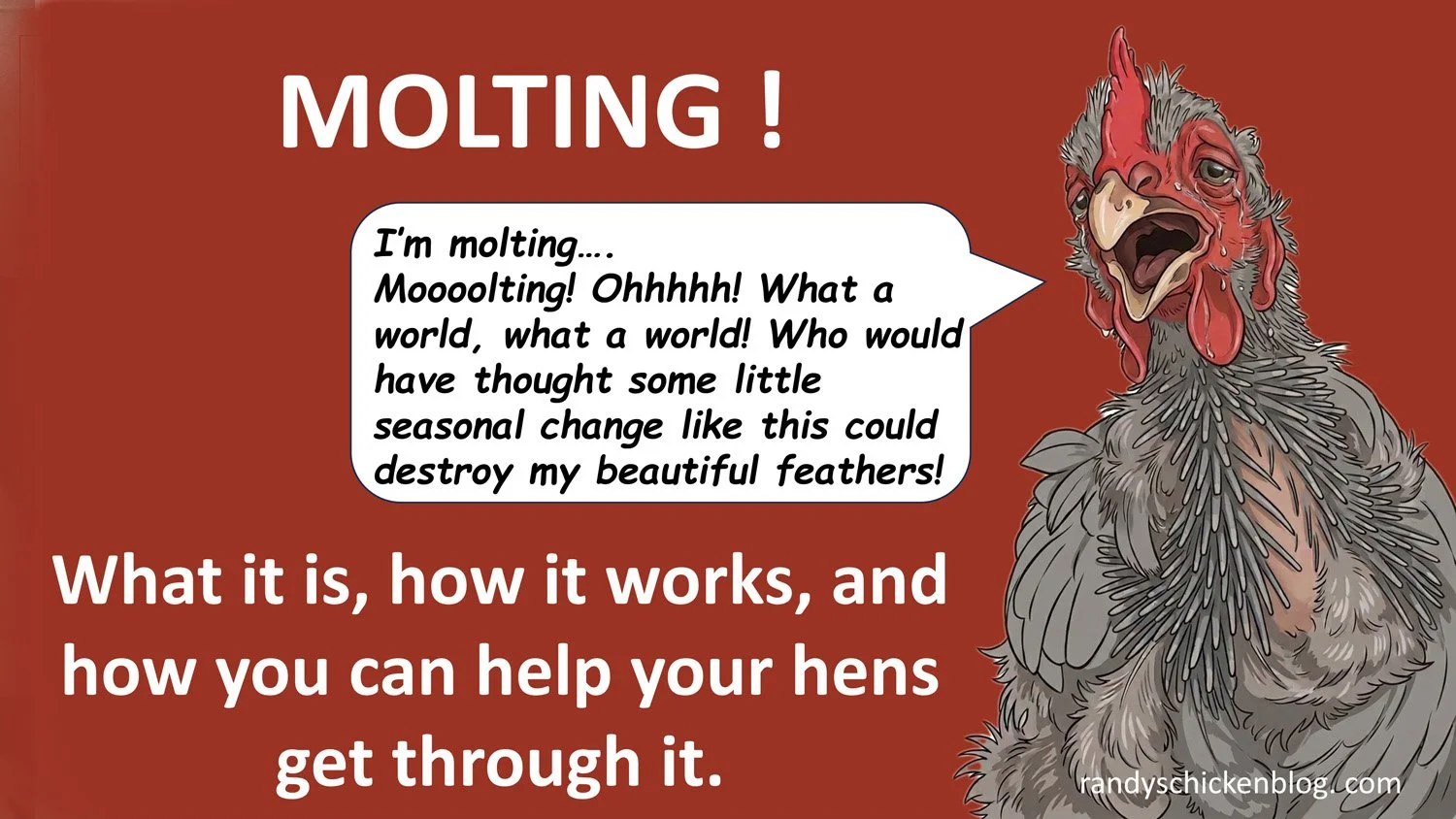
Why do chickens molt? What’s the point of losing all those feathers just so they can replace them with more feathers? Why does it happen? What triggers it? Does it hurt? How can you help your hens through the process?
All in Chicken Maladies
Why do chickens molt? What’s the point of losing all those feathers just so they can replace them with more feathers? Why does it happen? What triggers it? Does it hurt? How can you help your hens through the process?
Telemedicine for chickens has arrived. For backyard chicken keepers, this is an important breakthrough. When a hen falls ill, it adds another possibility to the checklist of options for diagnosis and treatment. And for those living in areas without access to local poultry vets, it provides something even more valuable—an option where there were no options at all.
Are our backyard flocks at risk? How can we protect them? If my flock becomes infected, what should I do? And what about people? Are we in danger of this bug infecting us?
“What, exactly, is bird flu? Are my chickens in danger? How can I protect them? Am I in danger? If I am, how should I protect myself? Why do we keep having new epidemics? Is there something wrong with the way they’re trying to stop it? There’s talk of a new approach to controlling it—how’s that going?
What’s up with the ridiculously high cost of eggs? Simple. It’s bird flu. Well…maybe it’s not so simple. Let me explain…
Do your chickens have worms? If you keep multiple generations of chickens on the same plot of ground for a number of years, like we backyard flock-keepers do, then yes. Your chickens are probably harboring worms. What should you do?
Chicken health advice from an avian vet! Topics include antibiotics, bumblefoot, euthanization, pain management, and scaly leg mites.
When people think of Polish chickens, they think of those elaborate, beautiful crests. Most people don't realize that Polish chickens also have “vaulted skulls.” Vaulted skulls are misshapen, with a large knob or vault sticking up from the top. A misshapen skull results in a misshapen, unusual, “hourglass” shaped brain. Vaulted skulls are often filled with holes. The only thing protecting parts of the chicken’s brain is a bit of skin and some feathers. Thus, chickens with vaulted skulls are vulnerable to brain damage. What are the genetics behind crests and vaulted skulls? And are these two traits connected?
Bird flu has been marching across the US, destroying flocks in its wake. Since avian flu first appeared in the news this year, people have been wondering about how this disease relates to them. They have been asking: “Can I catch flu from my flu-infected chickens?” While this 2022 bird flu strain is less likely to infect people than strains seen in the past, the answer is definitely “Yes!” But, perhaps the more profound and important question people should be asking is, “Will bird flu cause the next human pandemic?”
Flu - The Coop, part 2. What is bird flu? Actually, what is any flu? And while we’re at it, what’s a virus?
Flu - The Coop, part 1. The author falls prey to Covid and then writes about avian flu.
It looked like Rafael was trying to grow his own little unicorn horn. But he’d gotten confused and had grown it on entirely the wrong part of his body. It was actually a feather follicle cyst. Who knew?? Feather follicle cysts are a rare phenomenon in chickens.
A 2019 study showed that most of the diseases that cause our backyard birds to die are infectious diseases. Many of those diseases are preventable.
What are the main causes of death of our backyard chickens? The six top killers, determined by a scientific study on chickens in eight different states, may surprise you.
If Marek’s Disease strikes your flock there’s very little you can do except suffer as your sick chickens suffer, and end their suffering when it becomes severe. There is no cure. Thus, your best strategy is to prevent Marek’s from harming your flock in the first place. You can fight infection with biosecurity and prevent symptoms with vaccination.
Some of the main recommended practices for keeping our flocks safe can, with a few modifications, be good guidelines for protecting ourselves from the marauding coronavirus.
Something was wrong with Marissa! Her belly was blown up like an over-inflated basketball, she had lost interest in all the usual chicken activities and she spent all of her time standing in a quiet corner looking sad. Did she have ascites? How could I tell for sure? And how could I make this sweet little hen feel better?
There’s an ongoing serious Salmonella outbreak occurring among folks who keep backyard chickens, and CDC’s best response is to continue to trot out essentially the same old list of impractical rules. Why is nobody working on eliminating Salmonella from chickens in general and backyard flocks in particular? In this post I suggest a strategy.
This is the story of a lovable and tenacious Rhode Island Red chick named Roz, who entered this world crippled with curled toe paralysis—and then got better.


